
Accessibilty

At Fibar, our commitment goes beyond simply meeting requirements—we strive to exceed them. Our materials are independently evaluated against the ASTM F1951 standard for wheelchair accessibility, helping ensure that people of all abilities can move, play, and connect together.

Every system featured here meets ASTM F1951 criteria for both straight-line travel and maneuvering turns.

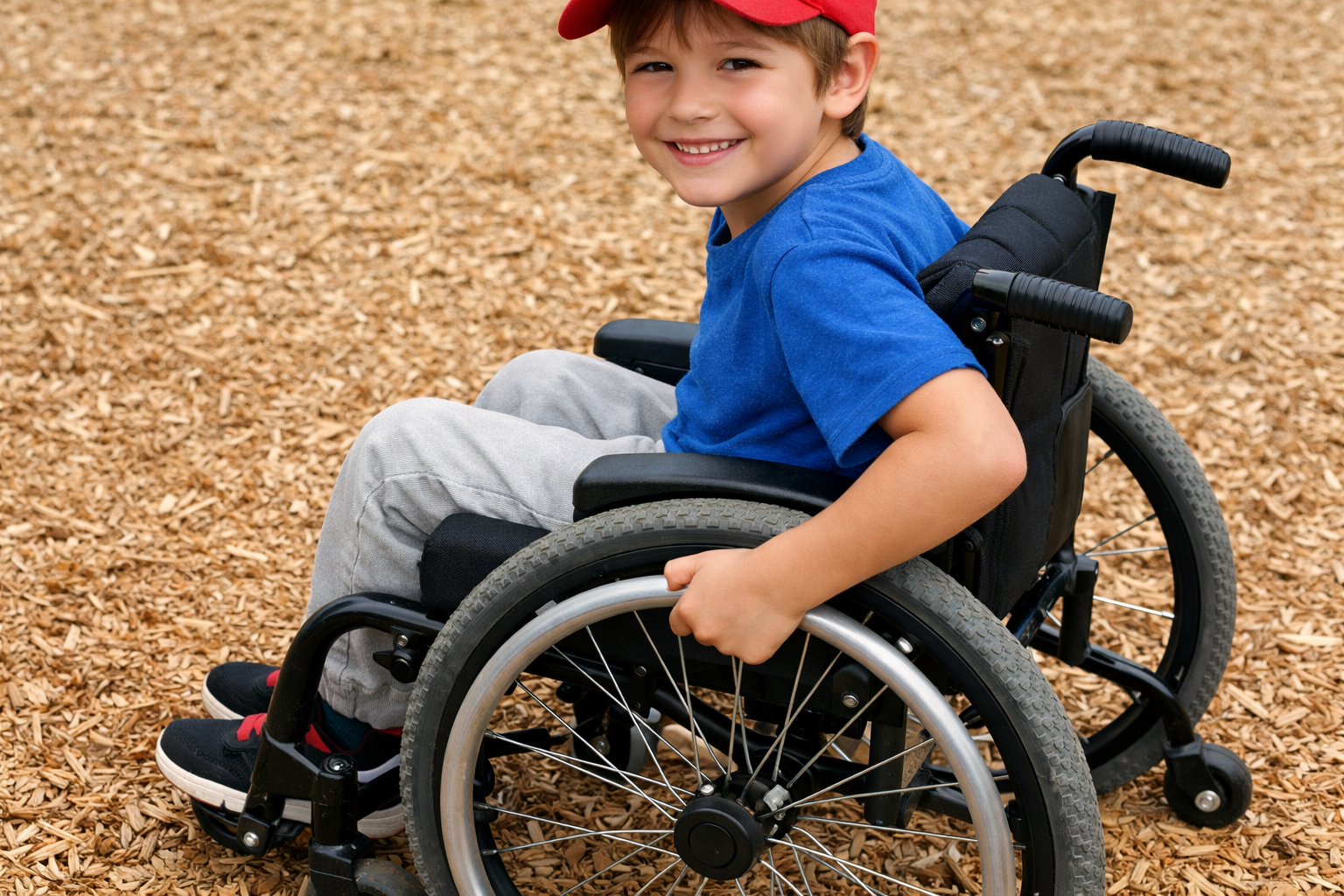
Child in Wheelchair on Wood Fiber Playground

Accessibility Standards Understanding ASTM F1951

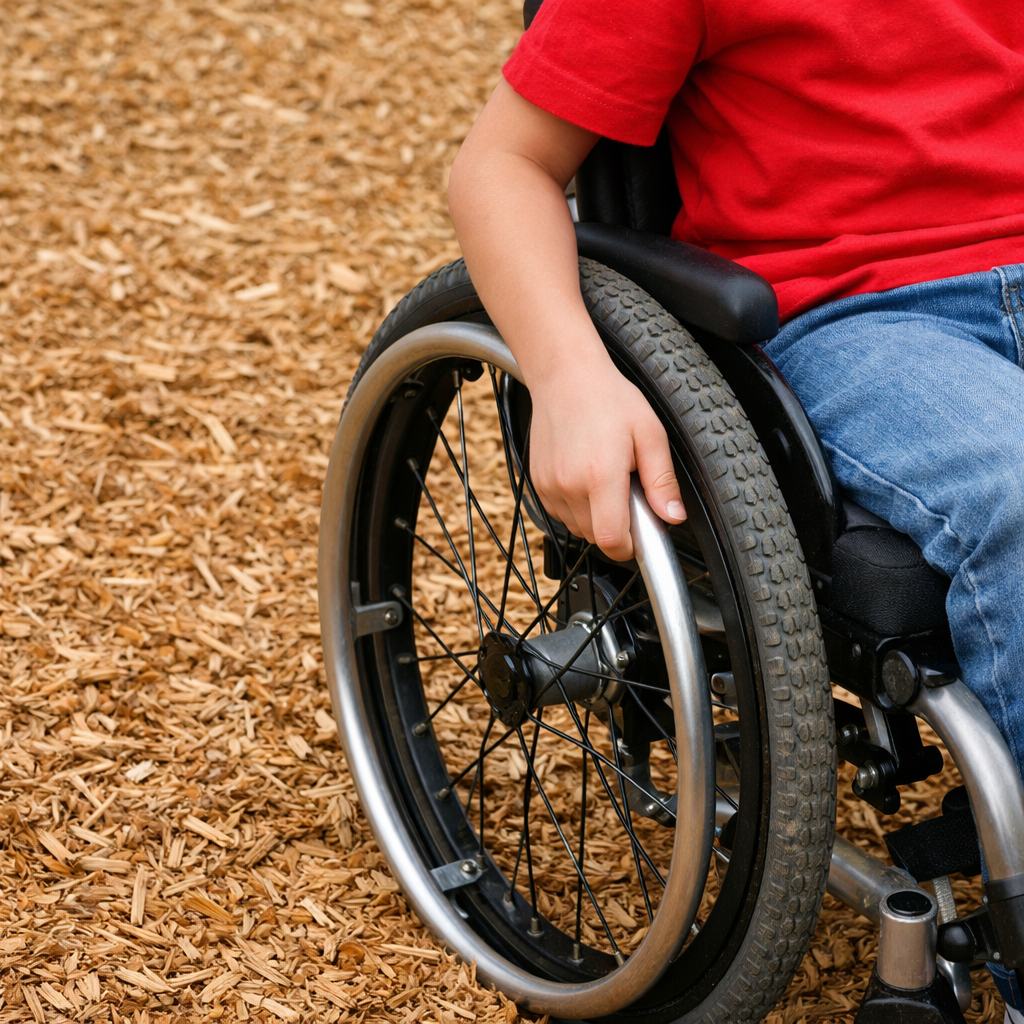
ASTM F1951 is a laboratory test used to evaluate how easily a wheelchair can travel over a surface. It measures the amount of effort required to propel a wheelchair both in a straight line and while turning. A surface passes the test if the effort needed does not exceed that of a standard control surface, defined as having a work value of 7.1% or less.

Why it matters: A passing result means the surface supports independent mobility for wheelchair users and others with mobility devices.

The Bottom Line: F1951 is about real-world mobility—how easily wheels move on the surface.
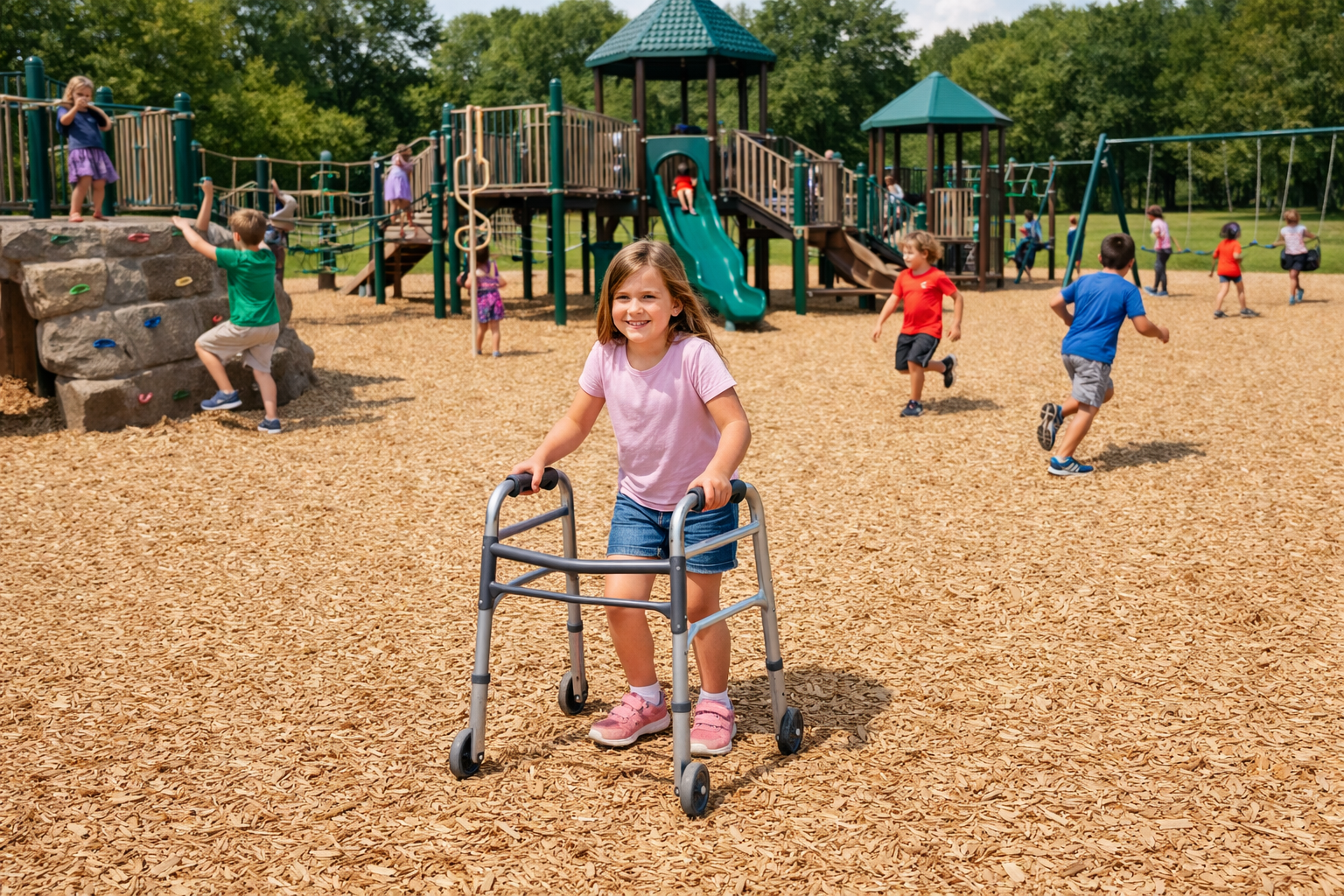
Verified Accessibility Testing for Fibar Systems

  • System: Fibar System 100, Fibar System 200, Fibar System 300
  • Material: Engineered Wood Fiber 
  • Subbase: Concrete
  • Results:
    • Straight Work: Pass
    • Turning Work: Pass
  • What that means: Movement (both straight and turning) requires no more effort than the control surface—smooth, predictable mobility.
  • Bottom Line: Fibar Engineered Wood Fiber Systems offers balanced, all-around accessibility with consistent mobility.
  • Material: Ethylene Propylene Diene Monomer Rubber (EPDM)
  • Results:
    • Straight Work: Pass
    • Turning Work: Pass
  • What that means: Movement (both straight and turning) requires no more effort than the control surface—smooth, predictable mobility.
  • Bottom Line: FlexGround by Fibar Poured-in-Place Standard EPDM offers balanced, all-around accessibility with consistent mobility.

Testing Documents available upon request.

  • Material: Thermo Plastic Vulcanized Rubber (TPV)
  • Results:
    • Straight Work: Pass
    • Turning Work: Pass
  • What that means: Movement (both straight and turning) requires no more effort than the control surface—smooth, predictable mobility.
  • Bottom Line: FlexGround by Fibar EnduraFlex Poured-in-Place TPV offers balanced, all-around accessibility with consistent mobility.

Testing documents available upon request.

Why Do These Numbers Matter?
  • Work Ratio under 7.1% = Pass. That means the surface is as easy or easier to push across than the benchmark control.
  • We show both straight and turning values because turning is part of real play—approaching equipment, changing directions, and social play moments.

Bottom Line: Lower numbers mean easier rolling; all Fibar systems listed here pass in both straight and turning.

EWF_wheelchair_resized

Designed for Accessibility

Accessibility should feel seamless, supporting confident movement without barriers. Every detail is designed to provide stable, reliable access for people of all abilities.

  • Smooth, stable surface that won’t catch or "grab" wheels
  • Even support across high-traffic areas and entry paths
  • Reliable control for turning, starting, and stopping
  • Designed for inclusivity—ideal for mobility devices, strollers, and walkers
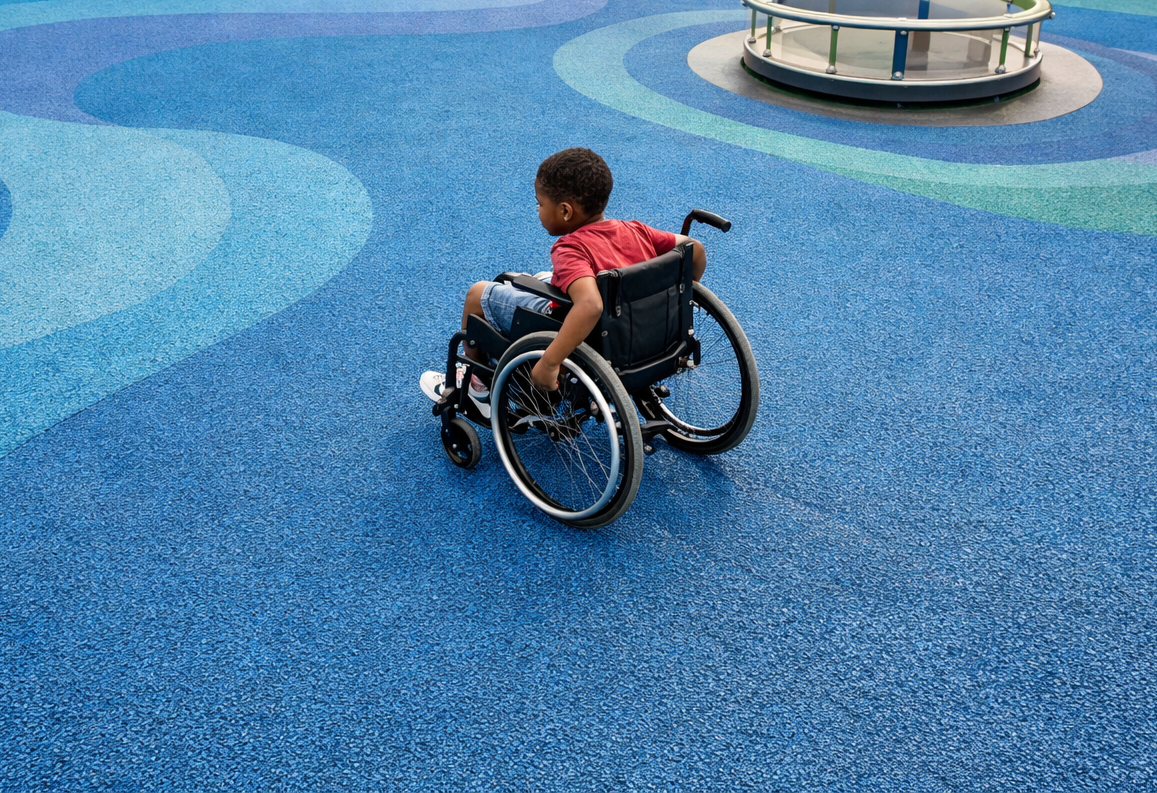
Girl on Engineered Wood Fiber Playground with Children Playing in Background

What Keeps Accessibility Consistent?

  • Professional installation: Proper base prep and seams help maintain smooth rolling.

  • Right infill & maintenance: Maintaining infill levels and brushing keeps fibers upright and the surface even.

  • Good drainage: Dry, firm fields and playgrounds roll better and feel safer.

  • Routine checks: Quick inspections catch minor issues (like depressions) before they affect mobility.

Bottom Line: Install it right, maintain it simply, and accessibility stays consistent.

Child in Wheelchair on Engineered Wood Fiber Playground-3

Accessibility Standards

The Department of Justice (DOJ) 2010 ADA Standards for Accessible Design provides guidance on the law requiring accessible routes within a playground, which must pass ASTM F1951 Standard Specification for Determination of Accessibility of Surface Systems Under or Around Playground Equipment) and ASTM 1292 Standard Specification for Impact Attenuation of Surfacing Materials Within the Use Zone of Playground Equipment. Additionally, it is essential that the surface is installed correctly including ADA FibarMat wear mats and an accessible entryway. The surface must be maintained according to Fibar’s maintenance instructions.

Frequently Asked Questions

 ASTM F1951 is the recognized method for evaluating wheelchair access on playground surfacing. Our passing F1951 results support compliance efforts when combined with proper design, routes, transitions, and maintenance practices. 

Yes—when installed over the correct base and maintained per our guidelines. We provide simple care instructions to keep the surface smooth and rollable.  

Different test, different purpose. F1951 measures mobility. Impact safety is measured by ASTM F1292. SprintPlay systems are engineered to address both accessibility and safety when specified accordingly.  

Contact Us