
| |
We
guarantee it. No more mud! If
there wasn’t something special about
our product, our name might be Clay’s
Dirt or The Hard Way Crushed Stone Company.
But the name Fibar stands
for something very special: selected wood
fibers that have been scientifically engineered
and manufactured to provide a soft, dust-free
footing horse people can count on in all
kinds of weather.
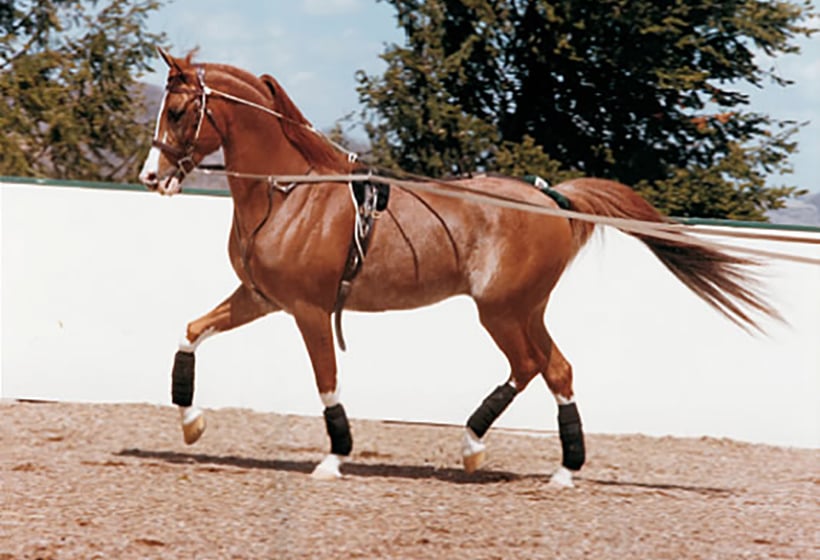
Its unsurpassed reliability
has made Fibar the
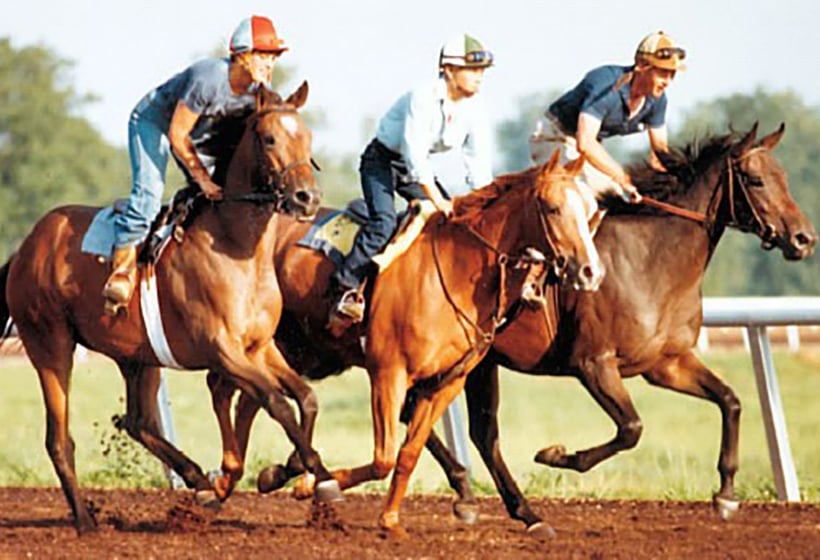
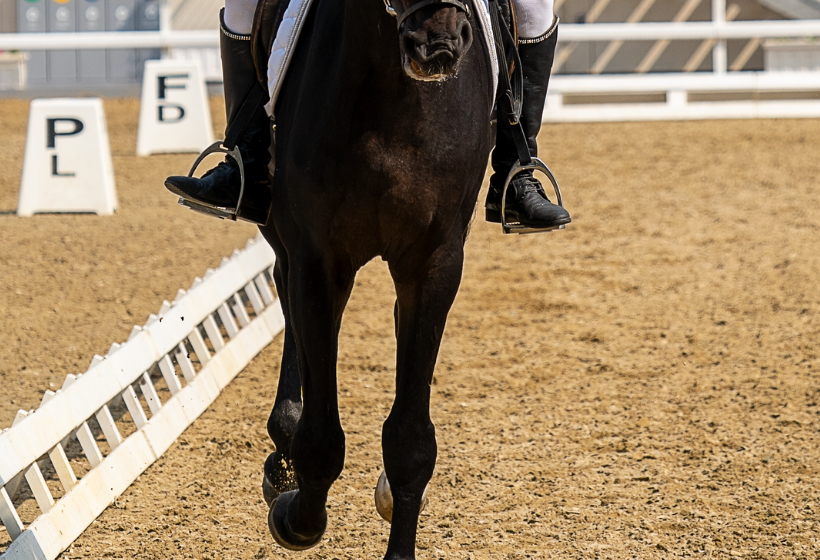
footing of choice for performance-oriented
owners and trainers who depend on it to
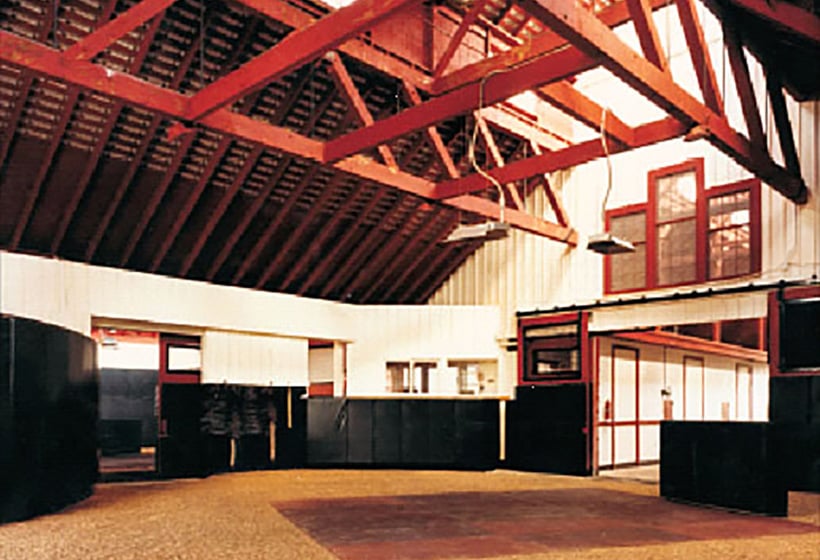
keep their training tracks, riding rings,
shed rows, gallops, hot walkers and breeding
sheds in full-time operation.
What matters to
these experts is not the Fibar name.
They care about Fibar’s results. Rain or shine, wind, sleet or
snow, a Fibar surface means no rocks, no
puddles, no ice, no dust and no slop. A
footing by any other name would not stay
so sweet.
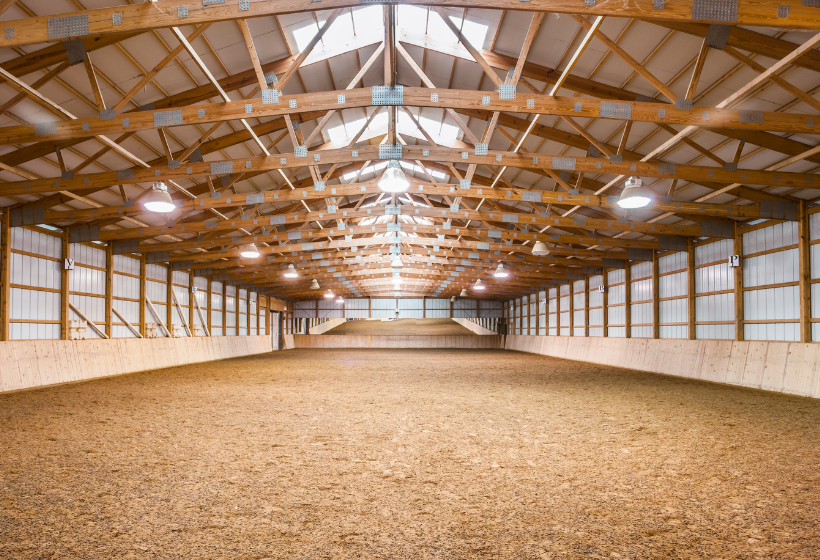
To talk with a Fibar footing
expert about your outdoor arena, contact
us today.
|
|
| |
- The site must be
surveyed with a transit so that the crown
or fall is accurately excavated.
- Remove vegetation
and topsoil from arena and surrounding
area. (Allow at least an 8’ apron
around the entire area for swales). Grade
base to 2% crown, or 2% cross-slope across
the short side. The shoulder and the
lay of the land will determine the best
grading decision.
- Incorporate swales
and ditches around the arena to keep
migrating surface water away from the
arena.
- Compact to better
than 95% modified Proctor. Depending
on the size of the arena, at least three
(3) density tests should be made.
- Install arena fence
(posts only). To ensure proper finish
height, allow an extra 9 inches for base,
sand and FIBAR wood fiber.
- Roll out FibarFelt
material 12 to 18 inches, overlapping
at all seams. Extend FibarFelt material
18 inches outside fence line. Slit FibarFelt
material with scissors or razor knife
to fit around posts.
- Completely cover
FibarFelt material and spread 6 inches
of 3/8" minus Uniformly Dense-Graded
Aggregate Base with a Sand Equivalency
between 30 and 50. NOTE: Please see detail
entitled "Crushed
Stone Base."
- Crushed stone base
should be checked for optimum moisture
content (AASHTO Test T176). On-site water
should be added, if necessary, prior
to compacting crushed stone base to 95%
modified Proctor using 15-ton vibratory
roller. Depending on size of the arena,
at least three (3) density tests should
be made. Be sure to compact between fence
posts and apron outside fence line. Allow
crushed stone screenings base to "cure" for
3 to 4 days.
- Install 2" x
6" pressure-treated baseboard. Set
boards 2" above top of aggregate
base to allow water to pass under and
still contain the Fibar wood fiber.
- Finish building
the fence. (Leave enough rails out of
one section to allow the Fibar truck
access to dump.)
- Spread 1" manufactured,
medium/coarse angular, washed sand (Not
greater than 10% passing #100 screen)
over the entire arena. Install Fibar
wood fibre (If necessary, check depth
every 10 feet to ensure even distribution.)
FIBAR wood fiber is best spread with
a small bulldozer or 4-wheel drive with
a landscape leveling box on back.
Since Fibar wood fiber is a naturally fibrous material,
there will be a variation in the amount the material
will compact and settle when spread. This settling
and knitting together is what makes Fibar wood
fiber work! The amount of Fibar we suggest is the
average for most people’s needs. Some customers
may prefer a slightly deeper surface and additional
material can be supplied at the customer’s
request.
- After rough grading,
the FIBAR surface should be watered thoroughly
and smooth harrowed using a 6’ x
10’ chainlink drag.
IMPORTANT |
In accordance
with standard design and
construction practices, The
Fibar Group, LLC recommends
using the services of a qualified
engineer or architect, who
is familiar with local soil
and climate conditions, to
evaluate and interpret the
above guidelines. Prior
to delivery of materials
such as crushed stone screenings,
sand, etc., request a gradation
analysis, which your engineer
can interpret for you.
|
|
NOTE: Site
visits are available where economically
feasible. A fee plus travel expenses may
be requested.
DISCLAIMER
THE ABOVE TECHNICAL ADVICE IS GIVEN GRATIS AND THE
FIBAR GROUP, LLC ASSUMES NO OBLIGATION OR LIABILITY
FOR THE ADVICE OR ASSISTANCE GIVEN OR RESULTS OBTAINED,
ALL SUCH ADVICE OR ASSISTANCE BEING GIVEN AND
ACCEPTED AT BUYER’S RISK.
TOP
OF PAGE
CRUSHED
STONE BASE
We recommend that customers carefully
evaluate locally-available quarry materials
such as sand, crushed stone, etc. using
the services of a local engineer. There
are numerous generic names for materials
that mean one thing in one State and something
completely different in another.
You will have noticed that under our
Road Base Installation Instructions, we
recommend using the services of a qualified
engineer. Sometimes that experience in
building outdoor riding arenas is limited.
We would also
suggest other supplementary information
that will help you and your engineer
specify the correct materials. Call or
write the National Stone, Sand & Gravel
Association, 1605 King Street , Alexandria
, VA 22314 (703-525-8788) or visit their
website, www.nssga.org.
A suggested gradation
analysis of the crushed stone base might
read as follows: (We recommend a maximum
particle size of 3/8".)
Sieve
Size |
% Passing
by Weight |
1/2" |
100% |
3/8" |
80 – 100% |
#4 |
35 – 65% |
#8 |
20 – 50% |
#40 |
10 – 30% |
#200 |
5 – 12% |
Before proceeding, have a sample taken
and checked for maximum density, optimum
moisture content, and compliance with gradation
specifications.
The combined
mixture should provide a cohesive mix.
Uniform and thorough compaction is the
key to a good base job. Nothing is more
important. And compaction immediately
following spreading – when the moisture
content is just right – being critical.
TOP
OF PAGE |
|