
| |
Poor
footing’s a sore
point with most horses. Working a horse on
suboptimal footing riding surface can hurt
more than his performance. It can also do
irreparable damage to his legs, feet or attitude.
A hard, rocky surface can give a horse splints,
stone bruises, and bucked shins. A deep,
cuppy surface could make a horse bow a tendon,
strain a suspensory, or slip a stifle. And
training every day on a surface that makes
him uncomfortable may make a horse resent
his job. After all, would you like to run,
jump or dance if it hurt? |
|
| |
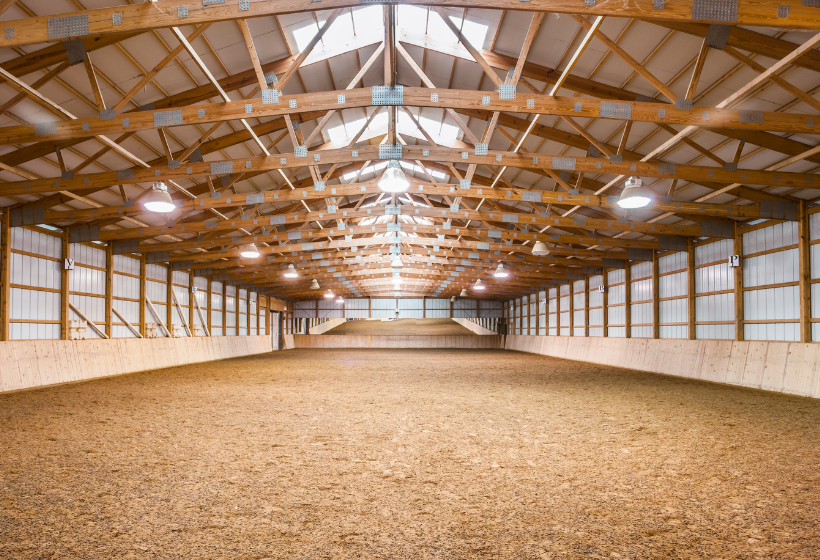
That’s
why performance-oriented owners and trainers
are switching to Fibar riding
surfaces. Fibar is engineered
to provide resilient, rock-free footing
that stays useful under all weather conditions.
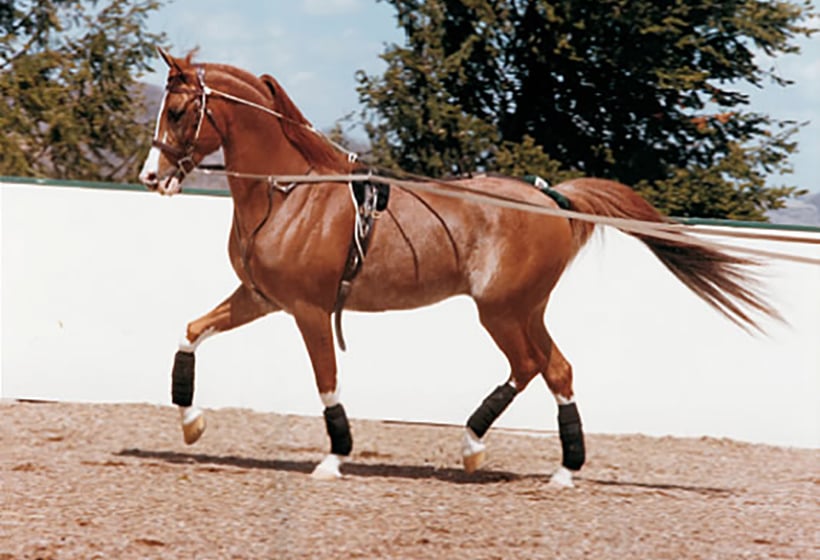
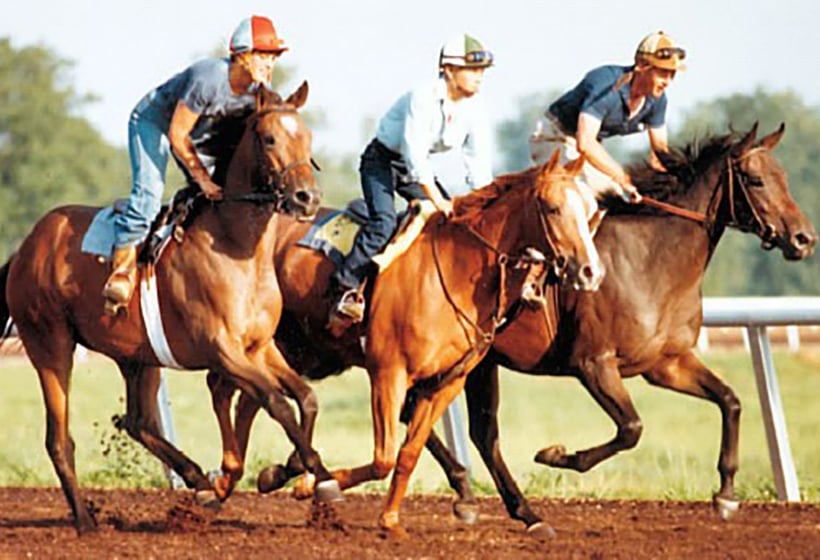
Veterinarians
report that racehorses that train on Fibar surfaces
suffer fewer injuries than on other surfaces.
And training track managers say that even
sore horses can train comfortably on Fibar.
Whether your horses are sound and trying
to stay that way or sore and trying to
get better, they’ll
put their best foot forward on Fibar.
To talk with a Fibar footing
expert about your arena, contact
us today. |
|
| |
NEW
CONSTRUCTION
- Have the contractor finish the base
in a hard, rock-free material such as
clay or stone dust and make sure it is
well-compacted.
- Compact to better
than 95% modified Proctor. Depending
on the size of the arena, at least
three (3) density tests should be made.
- Lightly
harrow about ½" to
roughen the compacted surface.
- Spread 1" manufactured,
medium or coarse, angular,
washed sand (not greater than 10%
passing #100 screen.). DO NOT USE MORE
SAND THAN RECOMMENDED. It may help
to roll and dampen the sand before
spreading the Fibar.
- Bring in
Fibar and spread. Since Fibar® engineered
wood fiber is a naturally fibrous
material, there will be a variation
in the amount the material will compact
and settle when spread. As a general
rule, if we deliver 3" loosely
laid, allow for about 33% compaction
giving a finished depth of about
2". This settling
and knitting together is what makes
Fibar wood fiber work!
- Water Fibar thoroughly
using a misting type of spray nozzle.
Make sure you apply enough water to
get the entire surface, including the
sand, damp.
- Smooth harrow
with a piece of chain link fence.
- Keep the surface
slightly damp, especially for the first
few weeks.
- Smooth harrow
regularly.
- NOTE: As with
any newly-installed product, allowances
should be made for a "break-in" period.
The wood fiber needs time to knit together
naturally and integrate with the layer
of sand.
EXISTING FACILITY
In most cases, we suggest removal of
the old footing, and, if necessary, re-grading
and compacting the existing base. Then
proceed at No. 3 above.
Note: The amount
of Fibar used will depend on personal
preference. For people who do a lot of
jumping or advanced dressage, we suggest
approximately 10 cubic yards for every
1,000 sq. ft.; i.e., 75 cubic yards for
an arena 70’ x 140’.
Some have used as little as
5 cubic yards
for every 1,000 sq. ft. with good results;
i.e., 50 cubic yards for an arena
70’ x
140’.
Click
here for instructions on how to maintain
your Fibar surface.
IMPORTANT |
In accordance
with standard design and
construction practices, The
Fibar Group, LLC recommends
using the services of a qualified
engineer or architect, who
is familiar with local soil
and climate conditions, to
evaluate and interpret the
above guidelines. Prior
to delivery of materials
such as crushed stone screenings,
sand, etc., request a gradation
analysis, which your engineer
can interpret for you.
|
|
NOTE: Site
visits are available where economically
feasible. A fee plus travel expenses may
be requested.
DISCLAIMER
THE ABOVE TECHNICAL ADVICE IS GIVEN GRATIS AND THE
FIBAR GROUP, LLC ASSUMES NO OBLIGATION OR LIABILITY
FOR THE ADVICE OR ASSISTANCE GIVEN OR RESULTS OBTAINED,
ALL SUCH ADVICE OR ASSISTANCE BEING GIVEN AND
ACCEPTED AT BUYER’S RISK.
TOP
OF PAGE |
|